
All The Ways I Have Died In My Sleep
By Ari Smith
December 5, 2025


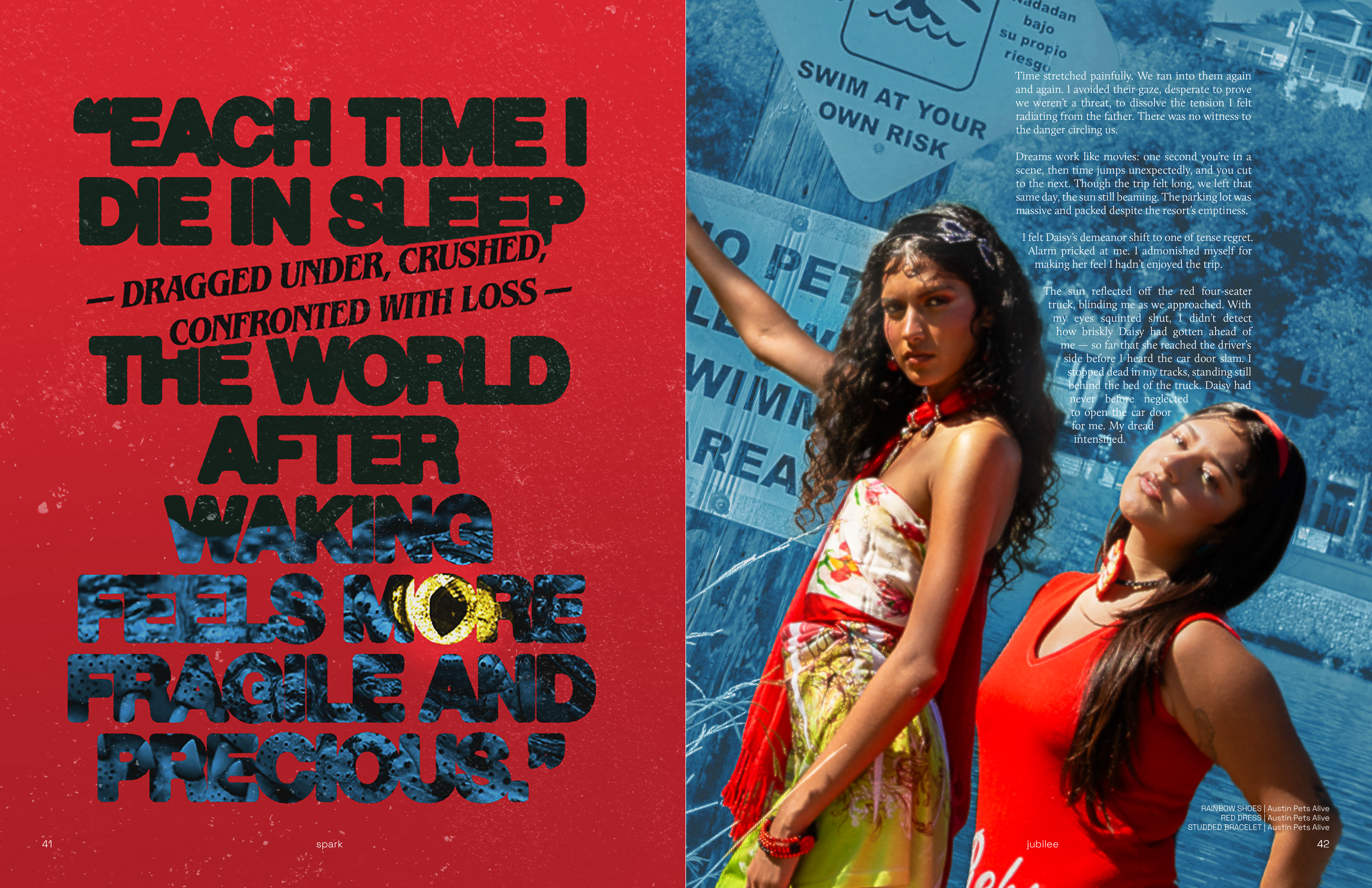
I laid there, waiting for the truck I knew would come barreling toward me. I wasn’t afraid. Death felt necessary. I imagined the weight of the tires, the quick crush of bones. I was impatient for it.
Since childhood, I’ve been visited by vivid nightmares: brutal, symbolic, and heavy with warnings — remember not to do this or else. Family and friends disappear without mercy. Messages contradict themselves. Symbolism collides with sudden violence. Yet each time I wake, breath fills my lungs, and the world glows a little sharper.
I’ve always feared the deaths of others more than my own. In dreams, my own death feels like a small necessity. My life, though fragile, keeps proving itself resilient.
Growing up in Florida, water pressed in from all sides. My parents put me in swimming lessons early, but natural bodies were forbidden; old women and children got dragged under by alligators. However, the indoor pool offered only the illusion of safety. In reality, it was a fluorescent-lit tomb of chlorine and bodies. Parents tentatively hovered over water that glinted unnaturally under buzzing lights.
That night, I was alone in the public pool. The water was still, holding its breath with me. The ceiling hummed a cold, electric yellow that vibrated in my teeth. The tiles sweated under my bare feet. A slick, deliberate chill brushed my calves. My chest tightened. I looked down and saw yellow eyes blooming from the dark water.
Before I could process what I saw, the pool opened and pulled me in. Teeth enclosed around my waist, and with this came an immediate sharp constriction. The beast dragged me deeper under the water, thick and unrelenting, until the world condensed to a green blur.
Lurching awake, I felt the familiar aftertaste of death: something quiet and ordinary. Each dream is a small rehearsal for the end, but life continues.
On another night, sleep carried me into another trial, a different stage for the same lesson. For the sake of my own sanity, I’ll obscure the identity of the other person in this next dream. I’ll call her Daisy.
Daisy brought me on an impromptu trip to a hotel resort in Orlando, a reward for good grades. The resort was a Floridian vacation fantasy — a windowed globe with fountains and luscious tropical greenery that formed a perfect ensemble of pinks and greens. A rumble of quiet voices rose and fell periodically, as if composed to fill the sparsely populated space.
I felt uneasy, but forced myself to gaze in awe to show Daisy I was grateful. I asked to step inside a chocolate shop. The room was wrapped in shiny red paper and filled with chocolates displayed on silver platters. I made a beeline for a sales associate with a sampling platter and wordlessly plucked a dusty brown cube. I bit into a bitter chalk with citrus filling.
As we stepped back into the main corridor, a family entered — a rough, “redneck” group. The father stood out — gray, overgrown beard, clean-cut mustache, and fly-fishing boots. We crossed paths, and their eyes lingered. I felt their animosity, sharp and unprovoked.
Time stretched painfully. We ran into them again and again. I avoided their gaze, desperate to prove we weren’t a threat, to dissolve the tension I felt radiating from the father. There was no witness to the danger circling us.
Dreams work like movies: one second you’re in a scene, then time jumps unexpectedly, and you cut to the next. Though the trip felt long, we left that same day, the sun still beaming. The parking lot was massive and packed despite the resort’s emptiness.
I felt Daisy’s demeanor shift to one of tense regret. Alarm pricked at me. I admonished myself for making her feel I hadn’t enjoyed the trip.
The sun reflected off the red four-seater truck, blinding me as we approached. With my eyes squinted shut, I didn’t detect how briskly Daisy had gotten ahead of me — so far that she reached the driver’s side before I heard the car door slam. I stopped dead in my tracks, standing still behind the bed of the truck. Daisy had never before neglected the gracious effort of opening the car door for me. My dread intensified.
I rounded the passenger side and froze. Through the window, I saw a body strewn across the back seat. It was Daisy: dead, with no wounds or blood. She was still, as if she were only asleep.
I looked to the driver’s seat. The Daisy there — a counterfeit presence — met my eyes with a phantom calm meant to reassure me that everything would continue as normal.
My memory flashed to the family’s violent glances and my ignored instinct.
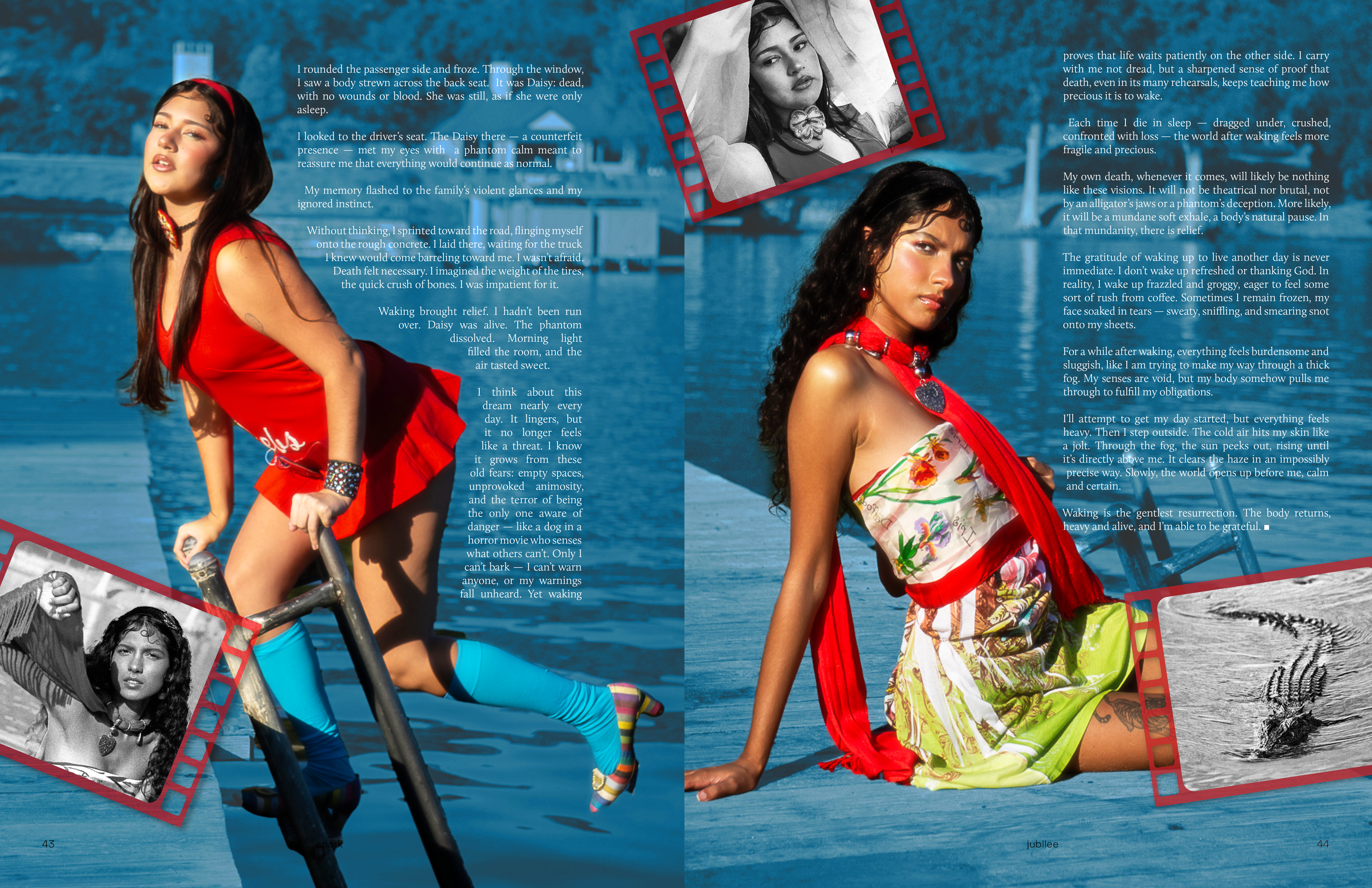
Without thinking, I sprinted toward the road, flinging myself onto the rough concrete. I laid there, waiting for the truck I knew would come barreling toward me. I wasn’t afraid. Death felt necessary. I imagined the weight of the tires, the quick crush of bones. I was impatient for it.
Waking brought relief. I hadn’t been run over. Daisy was alive. The phantom dissolved. Morning light filled the room, and the air tasted sweet.
I think about this dream nearly every day. It lingers, but it no longer feels like a threat. I know it grows from these old fears: empty spaces, unprovoked animosity, and the terror of being the only one aware of danger — like a dog in a horror movie who senses what others can’t. Only I can’t bark. I can’t warn anyone, or my warnings fall unheard. Yet waking proves that life waits patiently on the other side. I carry with me not dread, but a sharpened sense of proof that death, even in its many rehearsals, keeps teaching me how precious it is to wake.
Each time I die in sleep — dragged under, crushed, confronted with loss — the world after waking feels more fragile and precious.
My own death, whenever it comes, will likely be nothing like these visions. It will not be theatrical nor brutal, not an alligator’s jaws or a phantom’s deception. More likely, it will be a mundane soft exhale, a body’s natural pause. In that mundanity, there is relief.
The gratitude of waking up to live another day is never immediate. I don’t wake up refreshed or thanking God. In reality, I wake up frazzled and groggy, eager to feel some sort of rush from coffee. Sometimes I remain frozen, my face soaked in tears — sweaty, sniffling, and smearing snot onto my sheets.
For a while after waking, everything feels burdensome and sluggish, like I am trying to make my way through a thick fog. My senses are void, but my body somehow pulls me through to fulfill my obligations.
I’ll attempt to get my day started, but everything feels heavy. Then I step outside. The cold air hits my skin like a jolt. Through the fog, the sun peeks out, rising until it’s directly above me. It clears the haze in an impossibly precise way. Slowly, the world opens up before me, calm and certain.
Waking is the gentlest resurrection. The body returns, heavy and alive, and I’m able to be grateful. ■
Layout: Gianina Faelnar
Photographer: Aidan Nguyen
Videographer: Rylie Shieh
Stylists: Alexis Rae Saenz & Wen Wang
HMUA: Nguyen Pham
Models: Madilyn Hernandez & Aditi Tyagi
Other Stories in Jubilee
© 2025 SPARK. All Rights Reserved.